




What Is a Dram of Whiskey? Meaning, Size & Measures
A dram of whiskey is a small serving of whiskey — often enjoyed neat, with a little water, or over ice. It’s a traditional term rather than an exact measurement, although in UK pubs, a single measure of whiskey is usually either 25ml or 35ml.
You’ve probably heard someone ask for a dram, or perhaps a “wee dram,” without giving much thought to how much whiskey they’re actually ordering. Fair enough. It’s one of those terms that’s been around long enough to feel familiar, even if its meaning isn’t always clear.
So, how much is a dram of whiskey, where did the expression come from, and is it any different from a shot? Here’s what you need to know.
What Is a Dram of Whiskey?
A dram of whiskey is an informal term for a small pour of whiskey, particularly in Scotland and other parts of the UK. It’s commonly associated with enjoying whiskey on its own, rather than mixed into a longer drink.
Unlike a pint or a standard pub measure, though, a dram doesn’t have one universally agreed volume. Ask for a dram in one setting and you might receive 25ml; somewhere else, it could be 35ml or a different amount altogether.
That’s because “dram” describes the serving in a traditional, conversational sense. The quantity itself depends on where and how the whiskey is being poured.

How Much Is a Dram of Whiskey?
A dram of whiskey has no fixed modern size, but in a UK pub, a typical single serving is 25ml or 35ml.
Under UK rules, whiskey sold by the glass must generally be served in 25ml measures and their multiples, or 35ml measures and their multiples. Licensed premises use one of these measurement systems rather than both.
Here’s how the common serving sizes compare:
| Whiskey measure | Amount |
|---|---|
| Small single measure | 25ml |
| Larger single measure | 35ml |
| Double (25ml system) | 50ml |
| Double (35ml system) | 70ml |
| Informal whiskey dram | No fixed amount |
So, if you’re wondering how many ml are in a dram of whiskey, 25ml or 35ml is a useful reference point in the UK, but neither is the official definition of a dram.
At home, you might pour a little more or less. Using a measuring jigger is the easiest way to know exactly what’s in your glass.
Dram of Whiskey vs Shot: What’s the Difference?
The difference between a dram of whiskey and a shot is mainly how the terms are used, rather than how much liquid they contain.
A “dram” is a traditional expression, particularly associated with whiskey drinking in Scotland. A “shot” is a more general term for a small serving of spirits, usually poured into a shot glass.
There are a few useful distinctions:
| Dram of whiskey | Shot of whiskey |
|---|---|
| Traditional, informal expression | General term for a small spirits serving |
| Often served in a tumbler or tasting glass | Commonly served in a shot glass |
| Frequently associated with sipping whiskey | Sometimes associated with drinking spirits quickly |
| No fixed volume | Volume depends on the country and serving convention |
In the UK, either could contain a 25ml or 35ml measure. A shot isn’t automatically bigger than a dram, and calling something a dram doesn’t mean it has to be consumed in a particular way.
The glass and the occasion might change. The amount of whiskey doesn’t necessarily have to.
Why Is It Called a Dram of Whiskey?
The word “dram” has a much longer history than its association with whiskey.
It traces back through older systems of measurement to the Greek word drachma, which was associated with weight and currency. Over time, dram became the name of various small units of weight and volume.
In the old British imperial system, a fluid dram was approximately 3.55ml. That’s considerably less than what most people would expect if they ordered a dram of whiskey today.
As the word became part of everyday speech, it took on a looser meaning: a small serving of spirits, especially whiskey.
The original measurement has largely been left behind in everyday whiskey drinking, but the name has stuck. That’s why you’ll still hear people asking for a dram without expecting anyone behind the bar to reach for a 19th-century measuring instrument.
What Is a Wee Dram of Whiskey?
A “wee dram of whiskey” is a Scottish expression for a small serving of whiskey. “Wee” simply means small, making the phrase a familiar way of referring to a modest pour.
It’s a term you’ll hear in Scottish pubs, homes and conversations about whiskey, often when someone is offering a drink or suggesting a toast.
Despite the word “wee,” there’s no separate official measure for a wee dram. It doesn’t automatically mean less than an ordinary dram.
And while the expression is closely associated with Scotland, it can be used to describe Irish whiskey too. The spelling might change depending on what’s in the glass, but the meaning remains much the same.
How Many Drams Are in a Bottle of Whiskey?
The number of drams in a bottle of whiskey depends on how much you pour each time.
A standard UK bottle of whiskey contains 700ml (70cl). Using common UK measures, that gives you:
| Size of each dram | Servings in a 700ml bottle |
|---|---|
| 25ml | 28 |
| 35ml | 20 |
| 50ml | 14 |
| 70ml | 10 |
For example, if you’re measuring out 25ml servings, a 700ml bottle provides exactly 28 measures. With 35ml servings, you’ll get 20.
It’s also worth knowing how many units of alcohol are in each pour. For whiskey at 40% ABV, a 25ml measure contains 1 UK alcohol unit, while a 35ml measure contains 1.4 units.
The number of units changes with the strength and quantity of whiskey, so check the ABV on the bottle rather than relying on the word dram alone.
How Do You Serve and Order a Dram of Whiskey?
There’s no special ceremony required to enjoy a dram of whiskey. A glass, a measured pour and a preference for how you’d like it served will do nicely.
Choosing the Right Whiskey Glass
The glass you choose can make a difference to how you experience your whiskey.
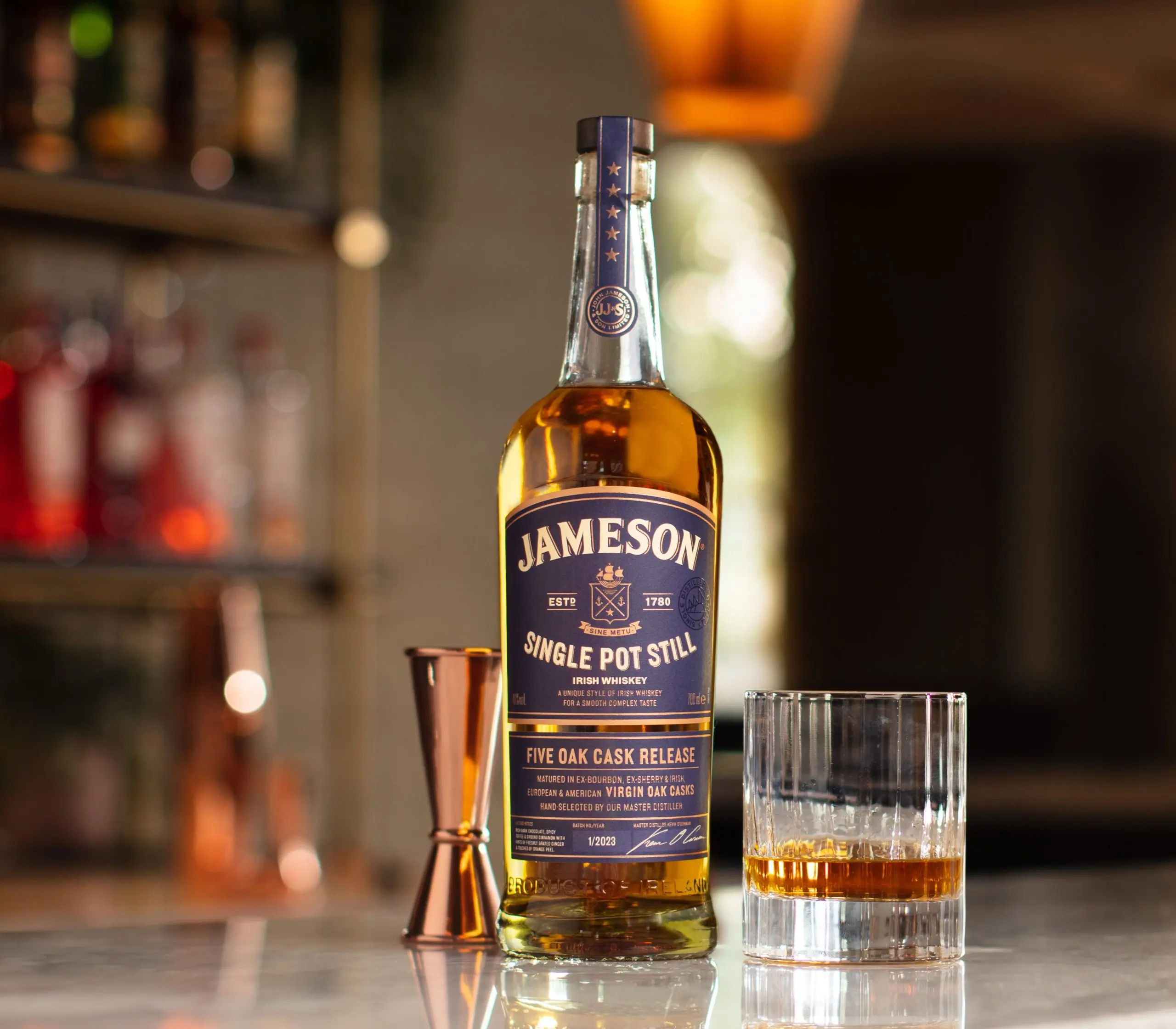
A traditional tumbler, sometimes called a rocks glass, gives you plenty of room for a dram served neat or with ice. A tulip-shaped tasting glass has a narrower opening that helps concentrate the aromas, making it useful when you want to explore a whiskey’s character more closely.
There are plenty of different types of whiskey glasses, but you don’t need a cupboard full of them to enjoy a good dram.
Ordering a Dram Neat, with Water or Ice
If you ask for a dram of whiskey in a UK pub, it’s worth specifying the size and how you’d like it served.
Ordering it neat means you’ll receive whiskey on its own, without ice or a mixer. A few drops of water can change how some of the aromas and flavours come through.
However, if you prefer your whiskey with ice, simply ask for it on the rocks for a chilled serve. Ice cools the whiskey and gradually dilutes it as it melts, so the flavour can change as you drink.
If you’re deciding between the two, the main difference between whiskey neat vs on the rocks comes down to temperature, dilution and personal taste.
Of course, not every whiskey serve has to be a dram. You might prefer whiskey with ginger ale, soda or another of your favourite whiskey mixers. A Jameson, Ginger & Lime is an easy example: Irish whiskey, ginger ale and fresh lime served over ice.
And if you’re in the mood for something with a little more preparation, a classic Whiskey Sour brings whiskey together with lemon and sweetness for a balanced cocktail. Unlike a dram served on its own, a cocktail uses whiskey as one measured ingredient among others.
However you prefer yours, knowing how to drink whiskey comes down to understanding what changes in the glass, then choosing what suits your taste.
Discover More About Irish Whiskey
Whether you’re ordering a wee dram at the bar or measuring a pour at home, the important thing to remember is that a dram is a traditional name, not a fixed quantity.
A single measure in the UK might be 25ml or 35ml, but there’s more than one way to enjoy what’s in the glass.
From whiskey’s history and production to different serving styles, there’s plenty more to discover in the Jameson whiskey guide. No specialist vocabulary required.