


Mocktail vs Cocktail: How are they Different?
There was a time when asking for “a cocktail, hold the alcohol” would have raised a few eyebrows. These days, ordering a mocktail is about as normal as asking for a pint. Whether you’re pacing yourself, off the drink for a while, driving, or just not in the mood, there’s no reason your glass shouldn’t look – and taste – the part.
Here, we’re breaking down mocktail vs cocktail in plain terms: what a mocktail actually is, what a cocktail really means, whether mocktails contain alcohol, why it’s called a “cocktail” in the first place, and how to enjoy both with Jameson in the mix (or not).
What’s the Difference between a Cocktail and Mocktail?
At the simplest level, cocktails are mixed drinks built around alcohol, while mocktails are mixed drinks built without alcohol. A cocktail usually starts with a base spirit – Irish whiskey, in our case – and then layers on mixers, juices, syrups and garnishes. A mocktail uses many of the same ingredients and techniques, but deliberately leaves out the boozy base.
The idea is that both can be colourful, complex and worth raising a glass to. One just comes with ABV, and the other lets you enjoy the ritual without the alcohol.

What’s a Mocktail?
A mocktail is a non-alcoholic mixed drink designed to feel like a “proper” cocktail – same glassware, same garnish game, same layered flavours – minus the alcohol. Instead of a spirit, you’ll usually see a mix of things like:
- Juices, sodas and tonics
- Syrups, purées and fresh fruit
- Herbs, spices and citrus peels
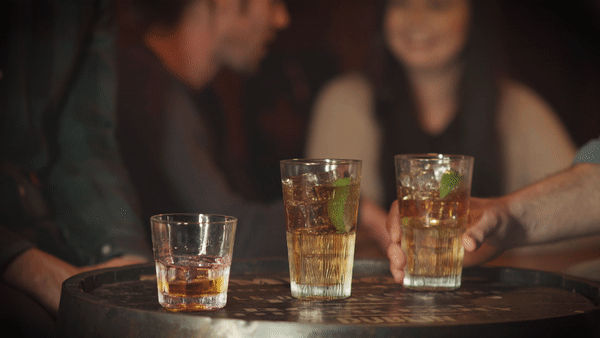
Mocktails are especially handy when you want something more interesting than water or soft drinks: zesty highballs, sparkling spritzes or rich coffee-based serves that look the part and taste grown-up, just without the ABV.
Does a Mocktail Contain Alcohol?
By definition, a mocktail shouldn’t contain any high-ABV spirits – that’s the key difference between a mocktail and a cocktail. When you ask “does this mocktail contain alcohol?”, you’re usually asking whether there’s whiskey, gin, rum or similar in the glass, and the answer should be no.
That said, some recipes might use tiny amounts of low-ABV ingredients (like our collection of low-alcohol whiskey cocktails) for flavour. If you or your guests are very strict about avoiding alcohol altogether, it’s always worth checking the recipe or asking the bartender exactly what’s going in.

What’s a Cocktail?
A cocktail is simply a mixed drink built around one or more alcoholic spirits. At Jameson, that usually means Irish whiskey as the star of the show, with ingredients like ginger ale, citrus juice, syrups, bitters and fresh herbs backing it up. A Whiskey Sour, an Old Fashioned, a Jameson, Ginger & Lime – all cocktails, all built on that base spirit. Some cocktails are as easy as whiskey plus a mixer over ice; others involve shaking, straining, egg whites, foams and garnishes that look almost too good to drink. Whatever the style, the presence of alcohol is what separates a cocktail from a mocktail.

Why Is It Called a Cocktail?
The exact origin of the word “cocktail” is still up for debate, and there are more theories than there are olives in a jar. One old definition from the early 19th century described a cocktail as a mixture of spirits, sugar, water and bitters – essentially an Old Fashioned – and the name stuck as shorthand for that style of mixed drink.
These days, “cocktail” covers everything from a simple highball to elaborate creations with smoke, foams and multi-layered flavours. Mocktails borrow a lot of that same language and technique, just without the alcohol.
Cocktail vs Mocktail: How Else Can they Differ?
When you look at mocktail vs cocktail side by side, the main difference is alcohol – but there are a few other distinctions worth knowing.
Cocktails start with a spirit like Irish whiskey, gin or rum, and build around it. The ingredient list can be short (whiskey plus ginger ale and lime) or more complex (egg whites, syrups, fresh juice, bitters, the works). Mocktails use a similar mix of juices, sodas, syrups and herbs, but instead of building around a spirit, they let the non-alcoholic ingredients take centre stage.
Flavour-wise, cocktails often have a bit more warmth and complexity from the alcohol itself, while mocktails tend to lean brighter, fresher and sometimes a touch sweeter. Done well, both should feel balanced, grown-up and worth taking your time over.
Mocktails vs Other Non-Alcoholic Drinks
Not every alcohol-free drink is a mocktail. A glass of water, a can of lemonade, a soft drink or a basic juice on its own all count as non-alcoholic drinks, but they’re not mocktails in the usual sense. Mocktails are mixed and garnished with the same care as cocktails, often using layered flavours, proper glassware and a bit of theatre in the presentation.
You can think of it this way: all mocktails are non-alcoholic, but not all non-alcoholic drinks are mocktails. If it looks like something you’d happily see on a cocktail menu – and just happens to be booze-free – it’s probably a mocktail.
When Should You Choose a Mocktail vs Cocktail?
Choosing between a mocktail and a cocktail usually comes down to what kind of night you’re having. Cocktails are ideal when you’re off-duty, in celebration mode and want to see what Irish whiskey can do in the glass. Mocktails come into their own when you’d rather skip the alcohol but still fancy something you can toast with.
You might lean towards:
- Cocktails when you’re settling in for the evening, trying new whiskey serves or marking a big occasion.
- Mocktails when you’re driving, pacing yourself, early up the next day or making sure everyone at the table has something special in their glass.
On a bigger night out, mixing the two – a few rounds with Jameson cocktails, a few with well-made mocktails – is a smart way to keep the flavour and the fun without overdoing it.
A Final Toast
Whether you’re reaching for a cocktail or a mocktail, the goal is the same: something that tastes good, looks the part and suits the occasion. Cocktails let Irish whiskey take centre stage; mocktails prove you don’t need alcohol for a drink to feel special.
If this has settled the mocktail vs cocktail debate in your head (or made you thirsty), explore more Jameson cocktail recipes and alcohol-free serves over on the Jameson site, and start planning your next round – with or without the whiskey. Whatever’s in your glass, the important bit is who you’re raising it with.
